
Coffee & QSR Industry Report (2026)
-
The GCBI Coffee & QSR Industry Report covers 14 brands across two subcategories: five coffee chains (Tim Hortons, Second Cup, Coffee Time, Country Style, Timothy's World Coffee) and nine quick-service restaurant and snack brands (Harvey's, Mary Brown's, New York Fries, Osmow's, Pizza Nova, Pizza Pizza, Yogen Früz, BeaverTails, Booster Juice). Data reflects national consumer perception surveys conducted in both 2025 and 2026.
-
Key Findings at a Glance
Booster Juice rose to #1 in the combined category, scoring 67.49—the highest score of any coffee or QSR brand.
The coffee subcategory fell sharply (−0.76 points), dropping from well above the national average to parity with it in a single year.
Three coffee brands declined by more than one full point—Coffee Time (−1.69), Timothy's World Coffee (−1.51), and Country Style (−1.28).
QSR brands improved with Gen Z (+0.22 points) while coffee brands lost ground with every generational cohort.
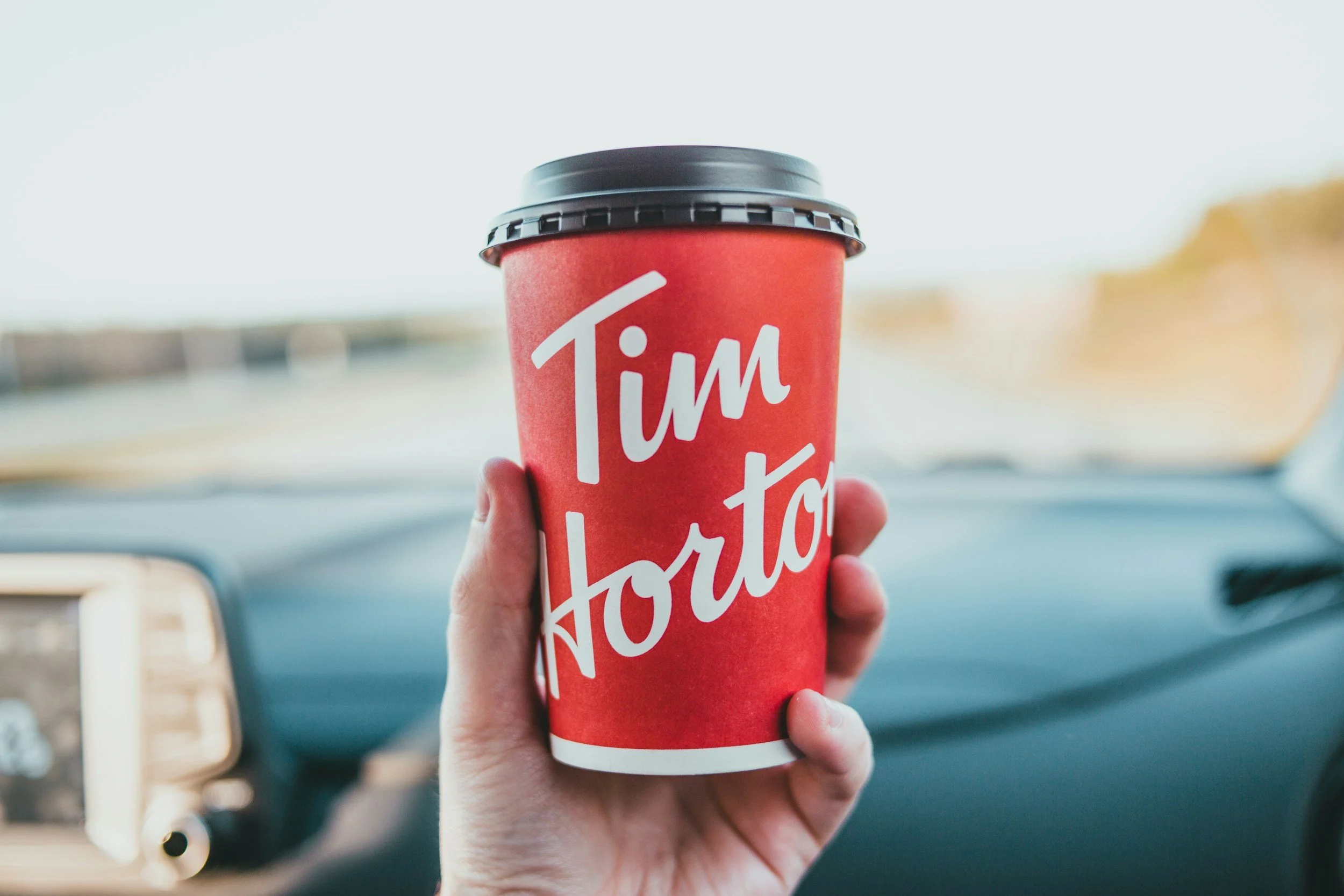
Tim Hortons has the largest Conservative–NDP political gap of any brand in the category (6.45 points) — a striking finding for a brand that has long positioned itself as Canada's universal institution.
-
The 2026 Category Story
The coffee & QSR category tells a story of two subcategories moving in opposite directions. QSR brands held nearly flat (−0.12 points), while the coffee subcategory fell significantly (−0.76 points)—losing its above-average perception position in a single year. Three of the five coffee brands now score at or below the national average. The coffee segment is in structural trouble; the QSR segment is not.
BeaverTails and Booster Juice occupy a tier of their own—both scoring above 67.40, more than 0.70 points ahead of every other brand in the combined category. Their shared characteristic is unusual: both generate stronger perception among low-income Canadians than high-income ones, despite their premium-adjacent positioning. This aspirational accessibility is rare in the GCBI and suggests brands with cross-demographic resonance that most QSR competitors have not achieved.
Pizza Pizza's rise of 25 national positions—on a score change of just +0.05 points—is the clearest illustration of what happened across the coffee and QSR category in 2026: brands that simply held steady rose dramatically in relative standing, because so many others fell around them.
-
What You'll Find in the Full Report
Complete brand rankings table—all 14 brands, 2025 vs. 2026, with subcategory labels.
Side-by-side dimension profiles: coffee subcategory vs. QSR subcategory vs. national average.
Regional breakdown: Ontario's divergence from Alberta and Atlantic Canada, and the Québec pattern.
Demographic breakdown: the Gen Z coffee crisis, the Boomer decline, income patterns, and the Tim Hortons political polarization story.
Competitive landscape: the two-speed coffee market and which brands are most at risk.
Five strategic implications including the Gen Z habit-formation problem for coffee brands.